Little Nightmares
- 4.5
- Rating
- 1.00M
- Installs
- $8.49
- Price

 Analysis by App-foxy
Little Nightmares is the kind of adventure game I recommend when you want something unsettling, focused, and very different from a typical action title. Its central appeal is the way it turns childhood fears into a playable journey: instead of relying on constant combat or a crowded interface, it asks me to move carefully through strange spaces, notice small details, and decide when hiding or waiting is smarter than rushing forward.
On mobile, that focus matters. The game is published by Playdigious and sits in the adventure category, with a Teen content rating. I found it best approached as a tense evening game rather than something to play casually for a few spare minutes. The atmosphere needs attention, and the quiet moments are just as important as the frightening ones.
The Android release launched in December 2023 and currently appears as version 1.4, supporting devices running Android 9 or later. It has passed the million-install mark and holds an average score of 4.5 from roughly fifteen thousand ratings, which gives a useful indication that the mobile version has found a substantial audience. Still, popularity does not make it suitable for everyone. Its slow, eerie style can be gripping for one player and frustrating for another.
You May Also Like

 Blood Strike: 2.5 Anniversary
Blood Strike’s Loadouts Turn Every Drop Into a Tactical Gamble
A close look at Blood Strike’s custom loadouts: how fast access to signature weapons reshapes its battle royale rhythm, rewards preparation, and narrows the gap between fights.

 Pandora - Music & Podcasts
Pandora’s Music Is Easy to Start, but Harder to Recover
Pandora’s strength is its low-effort path from a seed to a station. Its weak spot is how much confidence it asks you to place in connection, setup, and quiet recovery.

 8 Ball Pool
 Is Built on Rivalries, Rematches, and Routine
A close look at the rivalries, rematches, shared routines, and unanswered safety questions that turn a quick pool match into a persistent mobile community.

 Samsung Music
’s Quiet Strength Is Playing What You Already Own
Its reach comes less from spectacle than from dependable access to a personal library. That simplicity is both the app’s strongest retention engine and its ceiling.

 AccuWeather: Weather Radar
AccuWeather Review: A Quick, Clear Forecast for Everyday Decisions
For everyday plans, the best forecast is the one you can understand quickly. AccuWeather makes rain timing, radar, and local conditions easy to act on, with a few trade-offs.

 Hill Climb Racing
Why Hill Climb Racing Still Turns Crashes Into One More Run
A tiny car, a bumpy hill and one more upgrade: Hill Climb Racing keeps resurfacing because its simple chaos makes every near-miss feel personal.
More From Our News Desk



The fear-driven capability that defines the experience
I want this section to look at what makes the game’s central challenge feel distinctive, beyond simply being frightening. In my experience, treating vulnerability as a reason to observe rather than rush gives each early obstacle a clear purpose, and that same habit becomes the foundation for judging whether its later progress feels earned.
Turning vulnerability into the main tool
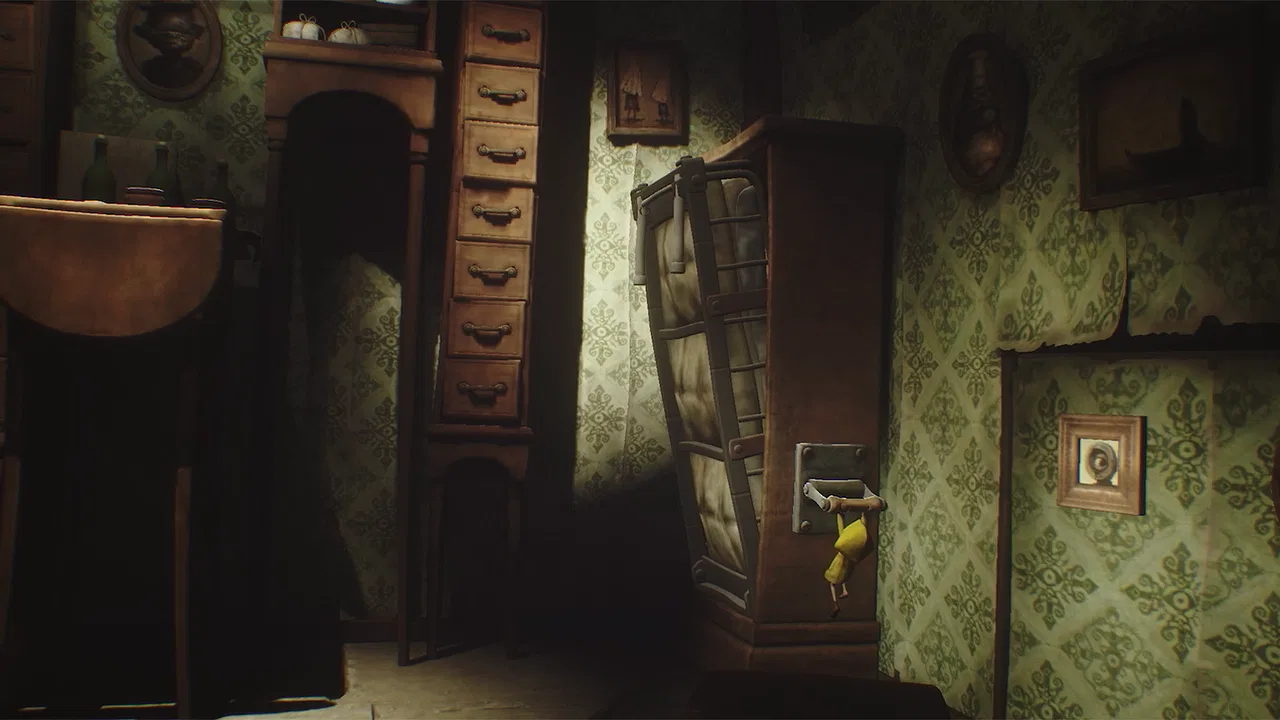
The most important capability here is not a special weapon, a large inventory, or a complicated skill tree. It is the game’s ability to make ordinary movement feel risky. My character is small in a world that feels oversized, and that imbalance changes how I read every room. A table, a doorway, a shadow, or a distant sound can become part of a problem to solve rather than simple scenery.
This design creates a very specific kind of tension. In many adventure games, progress comes from collecting equipment or defeating enemies. Here, progress is more closely tied to observation and timing. I often feel that I am learning the rules of a place by watching it first. The game encourages me to ask practical questions: Is that path safe? Can I cross before something returns? Is the obvious route meant to distract me?
The real strength is controlled vulnerability: I am rarely made to feel powerful, so even a small successful action can feel meaningful. Reaching a hiding place, crossing an exposed area, or understanding how a room fits together gives the experience its momentum.
Why the visual language works so well
The environments do much of the storytelling without stopping the action for long explanations. The scale of objects, the limited sense of safety, and the contrast between visible spaces and hidden corners create a story that I interpret through movement. This is especially effective for players who enjoy environmental storytelling and prefer to discover meaning rather than receive every answer directly.
That approach also explains why the game can feel more memorable than a conventional mobile adventure. I am not simply following markers from one objective to another. I am building a mental picture of the world from fragments. The result is more atmospheric, but it also asks for patience. If you prefer a clear mission list and constant confirmation that you are going the right way, this can feel deliberately opaque.
A useful distinction from horror games
I would not describe this as a straightforward chase game or a collection of sudden scares. Its unease comes from anticipation. The game gives me time to notice a threatening possibility, and that anticipation often does more work than a loud surprise. The fear is connected to movement, distance, and uncertainty, which makes the adventure feel closer to a dark puzzle journey than a conventional horror shooter.
That distinction is important when deciding whether to buy it. Someone looking for fast combat, frequent upgrades, or a highly social experience should look elsewhere. Someone who enjoys quiet exploration, visual clues, and carefully paced danger is much more likely to appreciate what Playdigious is doing here.
How the mobile version works in practice
The mobile version is worth considering as more than a smaller screen: touch input can change how confidently I approach a narrow or urgent move. I’ll focus on the practical choices that help preserve the intended tension without turning every difficult moment into a control test, and on when another platform may suit a player better.
Learning to treat controls as part of the challenge
Playing a tense platforming adventure on a touchscreen changes the experience. My attention is divided between reading the environment and making sure my fingers perform the intended action. That can make a narrow movement or a hurried escape feel more stressful than it would with a physical controller.
I found it helpful to slow down before interacting with anything important. Rather than holding a direction continuously, I tend to use short movements, pause, observe, and then commit. This is not merely a workaround for mobile controls; it fits the game’s broader rhythm. Rushing often creates mistakes, while a deliberate approach gives me time to understand the space.
A practical tip is to play with the device held comfortably and avoid starting a session when you are likely to be interrupted. The game depends on concentration, especially when a room combines movement, timing, and danger. A notification or a change in grip can break the flow at exactly the wrong moment.
Exploration rewards attention more than speed
The best way to approach each area is to separate discovery from execution. First, I look around and identify possible routes, hiding places, and objects that seem deliberately positioned. Then I attempt the sequence. This two-step habit reduces trial-and-error frustration and makes the puzzles feel more like observations than guesses.
Another useful habit is to remember the layout of a room before moving through it quickly. When the game creates pressure, I already know where I want to go. That preparation makes the tension stronger because I understand the risk, but it also prevents the experience from becoming a random scramble.
The game’s visual design can sometimes make the correct interaction less obvious. I do not treat that as a flaw every time, because uncertainty is part of the intended mood, but it does mean I occasionally test nearby objects or revisit a location. If you become stuck, the most productive response is usually to inspect the whole area again rather than repeat the same movement faster.
What the purchase model means for the decision
The listed price is $8.49, with in-app purchases shown at $0.49 per item. That places it firmly in the premium mobile-game conversation rather than the free-to-play crowd. I see that as a meaningful advantage for players who dislike energy systems, aggressive interruptions, or a design built around constant spending, but the upfront cost also raises expectations.
Before buying, I would ask whether you actually enjoy atmospheric games that may require patience. The price is easier to justify if you value a focused adventure and intend to finish it carefully. It is a less comfortable purchase for someone who normally samples free games for a few minutes and moves on whenever the pace slows.
The Teen rating is also worth taking seriously. The game’s disturbing imagery and threatening tone are central to its identity, so this is not a gentle family adventure despite the childlike perspective. I would choose it for older players who enjoy dark fantasy and unsettling situations, not for a young child simply because the protagonist is small.
The best everyday scenario for playing
A good session depends less on finding spare seconds than on having enough calm to notice what a room is telling me. I’ll describe the kind of everyday moment when the pacing works especially well, plus a simple way to make a short play window useful without losing track of the adventure.
A quiet evening with enough time to settle in
My favorite use case is a quiet evening when I can play for a meaningful stretch without multitasking. The opening moments of a session are better when I am not trying to answer messages, watch another screen, or squeeze the game between errands. The atmosphere builds gradually, and giving it room makes the strange environments feel more convincing.
It also works well as a shared viewing experience with a friend nearby. One person can control while the other notices visual details or suggests possible routes. I would not call it a multiplayer game, but its observational puzzles naturally invite conversation. The important limitation is that the person watching needs to enjoy slow discovery; someone expecting constant action may find the pauses dull.
When a short session can still be worthwhile
A brief session can work if I use it to revisit a difficult section or explore a familiar area with a clearer plan. It is less satisfying when I begin with only a couple of distracted minutes, because the game’s mood and spatial logic take time to settle. I would rather play one focused segment than repeatedly start and stop while trying to remember what I was doing.
For travel or waiting rooms, the decision depends on your tolerance for interruption. The game’s compact visual focus makes it tempting to open anywhere, but tense sequences are not ideal when you may need to put the phone away suddenly. I prefer using it when I can keep both hands available and maintain a stable grip.
Why it suits players who like to interpret
This is a strong choice for someone who enjoys asking what a setting means, not only how to escape it. The game’s unusual scale and disturbing imagery encourage interpretation, and the lack of constant explanation leaves room for personal reactions. I found that especially rewarding after a session, when I was still thinking about a location or a threatening figure rather than immediately forgetting it.
By contrast, players who need explicit objectives may feel under-supported. The same ambiguity that creates atmosphere can make progress slower. If you usually prefer adventure games with maps, quest logs, dialogue choices, and clearly signposted solutions, a more conventional title may be a better fit.
The tradeoffs behind the atmosphere
The atmosphere is a real strength, but it comes with tradeoffs in clarity, pace, and comfort on a touchscreen. I’ll weigh those costs against the experience they create, so readers can tell whether the uncertainty feels compelling to them or merely slows down the kind of game they wanted.
Immersion versus convenience
Little Nightmares gains much of its identity from withholding comfort. It does not feel designed to make every action effortless or every answer obvious. That strengthens the mood, but it also means I sometimes spend longer than expected testing a route or understanding what the environment is asking me to do.
On a console or computer, a physical controller can make precise movement feel more natural. On a phone, the same tension can be intensified by touch input. Some players will enjoy that extra pressure because it makes escapes feel personal. Others will see it as friction that gets in the way of appreciating the art direction.
My advice is to consider your hardware and habits honestly. Android 9 support makes the release accessible to a broad range of compatible devices, but compatibility alone does not guarantee that every screen size or control preference will feel equally comfortable. If you already know that touchscreen platforming irritates you, the mobile format may be the wrong way to experience this particular adventure.
Atmospheric pacing versus immediate entertainment
The game does not try to entertain me with a new reward every few seconds. It builds tension through repetition, silence, and gradual discovery. That is a strength when I want a story-rich mood, but a weakness when I am looking for a quick burst of action after a busy day.
Compared with the usual alternatives in the adventure category, this is less about collecting a large range of tools and more about understanding the environment. Compared with free mobile horror games, it feels more focused and less dependent on disposable jump scares or repeated monetized loops. Compared with a relaxed puzzle game, it carries a much heavier emotional tone.
Those comparisons help clarify the purchase. I would choose this over a free alternative when I want a crafted, self-contained-feeling atmosphere and can accept a premium entry price. I would choose a conventional puzzle adventure when I want clear feedback, lighter subject matter, or a more forgiving pace.
Ambiguity versus accessibility
Some of the most interesting moments come from not knowing exactly what is happening. However, ambiguity can affect accessibility in a practical way. A player with limited patience for visual searching may interpret a subtle clue as poor direction rather than intentional mystery.
I recommend taking notes mentally about recurring visual patterns and checking corners before assuming a route is blocked. This small change in approach makes the game more manageable. It also reduces the temptation to search randomly, which is the main way I found the slower sections could become tiring.
Who gains the most from this adventure
Not every adventure fan will enjoy a journey built around waiting, watching, and interpreting unsettling spaces. I’ll bring the review’s practical considerations together to identify who is most likely to value this particular experience, and who would be better served by a clearer, faster, or lighter alternative.
The ideal player
I think the best audience is someone who enjoys dark atmosphere, environmental storytelling, and puzzles solved through observation. You will probably get the most from it if you are comfortable with a vulnerable protagonist, measured pacing, and situations where the safest action is to wait and watch.
It is also a good match for players who want a mobile game that feels distinct from an endless service model. The developer, Playdigious, has brought a recognizable adventure experience to phones rather than reshaping it into a social or competitive format. That makes it easier to recommend to a friend who wants a serious single-player session.
The audience response is encouraging: the game has around fifteen thousand ratings and more than a million installs. I would treat those figures as evidence of broad interest, not as a guarantee that every player will enjoy the same pacing. The personal question is whether tension created by uncertainty sounds appealing or exhausting.
Who should skip it
I would skip this purchase if you want a cheerful platformer, a fast combat loop, or a game that explains every objective immediately. I would also be cautious if you dislike frightening imagery or if you are buying it for a child because the premise appears visually simple. The Teen rating reflects the darker experience you are actually getting.
Players who need highly precise physical controls may prefer another platform, especially if they already struggle with touchscreen movement. And if your main goal is a free game to play in very short bursts, the $8.49 price and deliberate pacing may not feel worthwhile.
My recommendation after using it
I recommend Little Nightmares to friends who want an eerie adventure built around vulnerability rather than power. Its strongest capability is the way it makes observation feel like survival: I study spaces, plan movement, and use patience as my most reliable advantage. That idea remains effective because it shapes both the puzzles and the emotional tone.
The mobile version is not frictionless. Touch controls can make precise moments demanding, the storytelling leaves room for uncertainty, and the slow pace will not suit every evening. The small in-app purchase price shown for individual items also means I would review the purchase screen carefully, even though the main decision is the upfront premium cost.
For me, the tradeoff is worthwhile when I play with concentration and let the atmosphere develop. I would not recommend it as a universal adventure game, but I would strongly suggest it to anyone who likes unsettling worlds, visual clues, and the feeling that simply reaching the next safe place is an achievement. If that sounds like your kind of tension, this is one of the more distinctive dark adventures you can carry on an Android device.
FAQs for Little Nightmares
01What is Little Nightmares, and what kind of game is it?
Little Nightmares is a dark atmospheric adventure and puzzle game in which you guide Six, a small child trying to escape a mysterious underwater vessel known as The Maw. The game focuses on exploration, stealth, environmental puzzles, and unsettling storytelling rather than traditional combat. Its eerie visual style, sound design, and disturbing creatures create a tense experience from beginning to end.
02Is Little Nightmares difficult for new players?
Little Nightmares is generally accessible, but some sections can be challenging because the game provides very few instructions. Players must observe their surroundings, experiment with objects, and learn enemy movement patterns. Stealth sequences and timed escapes may require several attempts, while puzzles are usually manageable once you understand the environment. Patience is more important than fast reflexes in most situations.
03Does Little Nightmares require an internet connection to play?
After installation, Little Nightmares can generally be played offline, making it suitable for gaming while traveling or without a stable connection. An internet connection may still be needed to download the game, verify the purchase, receive updates, or access platform-related services. Availability of offline play and installation requirements can vary slightly depending on whether you use Android, iOS, or another supported platform.
04Is Little Nightmares suitable for children?
Despite its small protagonist and stylized graphics, Little Nightmares is not designed specifically for young children. The game contains frightening imagery, disturbing creatures, perilous situations, dark themes, and moments of implied violence. Its content may be unsettling for sensitive players. Parents should review the age rating and consider whether their child is comfortable with horror, suspense, and psychologically disturbing environments.
05How long does it take to complete Little Nightmares?
A first playthrough of Little Nightmares usually takes approximately three to five hours, depending on how quickly you solve puzzles, avoid enemies, and explore each area. The compact length suits players who prefer a focused cinematic experience rather than a large open world. Collectibles and optional exploration can add extra time, while replaying chapters may help uncover details missed during the initial playthrough.
Pros
- Haunting art direction creates a memorable
- storybook-like atmosphere.
- Environmental puzzles reward careful observation rather than fast reactions.
- Short chapters make it easy to play in brief sessions.
- Sound design adds tension without relying on constant jump scares.
- Touch controls are simple and generally responsive on mobile devices.
Cons
- Some puzzle solutions feel unclear and may require trial and error.
- The dark visuals can make small interactive objects difficult to spot.
- Chase sequences may feel frustrating when timing is not immediately obvious.
- The campaign is relatively short compared with its premium price.
- Occasional camera angles make platforming and movement harder to judge.

Little Nightmares
Gallery